Zouk vs Kizomba
What is the Difference between Kizomba and Zouk Dance?
Musicality
Wow… those are totally different! This is gonna be a long answer. Where do I start…
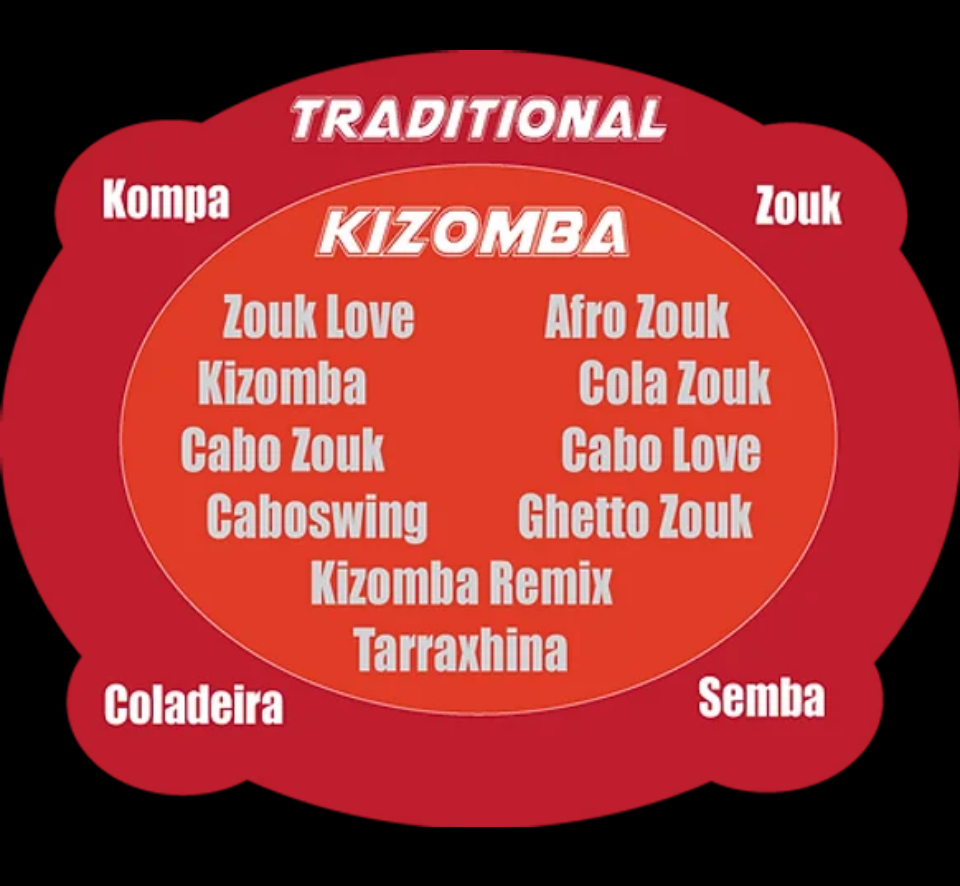
So, let's start with the semantics. Kizomba is a type of music that comes from Angola. It is typically said that the origin of the kizomba sound comes from Semba, which is a traditional dance from Angola (not Brazilian Samba). Most people who refer to Kizomba are actually really refering to what is called Ghetto Zouk, which is a close cousin of kizomba… As you can imagine, there is a bit of confusion when you start to talk about names and type of music, so here's a quick example of each.
**This is a kizomba:
This is a Ghetto Zouk
And this is a Semba
I'm guessing that you can hear the likeness of the kizomba and the Semba but can also hear the difference between kizomba and Ghetto Zouk… the reason those two are related is because they are linked by a single group: Kassav. They are one of the original Zouk group and, when they traveled around the world in the 1980’s, passing by Angola and the Portuguese talking countries around, they influenced the musicians who were mostly playing Semba to slow down their songs a bit and started doing what is now called kizomba in Angola. Other similar types of music also started to emerge in the other African Lusophone countries (Mozambique, Sao Tome, Cape Verde, Guinea Bissau…), some evolved to become Ghetto Zouk.
Here is a song from Kassav:
Now, let's talk about Zouk… like I just stated, Kassav are one of the original Zouk group. Their sound was mostly influenced by kadans, a music style from Haiti, which became kompa music. The music style of Kassav was called Zouk Béton. It was a fast paced high energy music mostly based on electronic sounds and MIDI keyboards and drums… Let's fast forward to now… Zouk music has become a different type of music. It is now much slower and more sensual.
Here is a Zouk song
This type of music influenced another type of music in another country, Brazil. Brazilian Zouk has an interesting story. It came from Lambada, a music style and type of music that didn't really had a long lifespan. The Lambada dancers wanted to still be able to use their skills and be able to dance and so, they used Zouk music, which has a very simple rythmic pattern, and started Lambada Zouk… that became Brazilian Zouk (some people just call it Zouk, which adds to the confusion)… since the dance doesn't have a strong link to the music style, Brazilian Zouk dancers can dance on various types of music, as long as the rhythm stays within a certain pattern.
Dances
Now, let's break down the differences in the way those are danced.
Zouk
- Usually danced in tight embrace if we're talking about the recent type of zouk music. It is mostly sensual but doesn't HAVE to be.
- The footwork is mostly very simple… it is mostly a right/left step following the speed of the music.
- The couple doesn't move around the dance floor that much… they mostly stay in one spot and turn togheter on that spot.
Here's an example of Zouk dancing… not the best video, but it's good enough to compare.
Now, for the Kizomba:
- Kizomba is a walking dance. That's the easiest way to describe it. The couple moves around the dance floor in a random pattern… but they mostly walk.
- It is usually said by Angolans that kizomba is a family dance, which technically means that it is a dance that doesn't NEED to be sensual but can be.
- It has some similarities with tango in the sense that the footwork can be similar.
- Nowadays, there are different types of “kizomba“ dancing. Traditional and New kizomba (sometimes called French Kizomba by some or Urban Kiz). This type of dance is more technical and has links to hip hop, and dancehall and even, sometimes Brazilian Zouk or Salsa…
Here's a video of traditional kizomba
And another one of modern kizomba.
Sometimes, you'll see people dancing kizomba and staying on a spot… that is the extra sexy PART of kizomba called Tarraxinha. It is not Kizomba or Urban Kiz, but a part of it that can or cannot be integrated in the dance.
That's Tarraxinha
I'm guessing that's the part that can be mixed with Zouk… but it isn't Zouk or Kizomba, it's part of the umbrella term that people call “Kizomba”.
Now, for Brazilian Zouk.
- Brazilian Zouk is way more dynamic than the two other dances… and the steps usually have a set pattern, like salsa or bachata (not the same pattern as both…) It’s a very distinctive difference as the two other dances don't.
- It is technically way harder to master that dance as it involves full body rolls, head rolls, large arm movements, etc…
- Sometimes, the dancers stay in place, but it's usually not the way they would dance a whole song…
- Nowadays, some Brazilian Zoukers mix up their dance and add kizomba and Zouk element in their dance, which can add to the confusion.
Here's an example of Brazilian Zouk
And an example of lambada Zouk
You can definitely see there that the energy between both is totally different but there are some similarities in the way the girl turns a lot… which almost never happens in Zouk or Kizomba.
Here's a last video of Brazilian Zouk so you can compare it with the lambada Zouk easier.
Hope my explanation was clear enough…