Report - Larp Limbo
Limbo
by Tor Kjetil Edland
Source: https://larpfactorybookproject.blogspot.com/2013/10/limbo.html
Date: October 27, 2025
On October 25, 2025, I ran the larp Limbo by Tor Kjetil Edland. It had been years since the last time I ran a larp. I have run Limbo at least four times before, and since Halloween was approaching, I decided to run it again. There were six participants in the game, and none of them had ever played a larp before.
The game was advertised simply as a “roleplay activity,” which was done intentionally to avoid people creating barriers due to the word larp. In fact, when I began the workshop and mentioned that we were about to play a larp, several participants hesitated immediately because they associated larp with “boffer larp” and didn’t want to play that kind of game. Luckily, they ended up enjoying the experience and learned that larp can be much more than just boffer combat.
The tone of the game was serious and supernatural. Players were instructed to come in monochromatic outfits, and by chance, all of them arrived dressed in black. Before the game began, we did two workshops: The Wool Yarn and The Memory Lane.
The goal of The Wool Yarn was to introduce players to one another and establish the tone for the game. Players held onto a piece of string and tossed the yarn to another participant while asking a question. I encouraged them to ask deep and meaningful questions about life. After several rounds, a web of interconnected relationships was created. This provided a visual illustration of how life works; how we are all connected to many people without even realizing it.
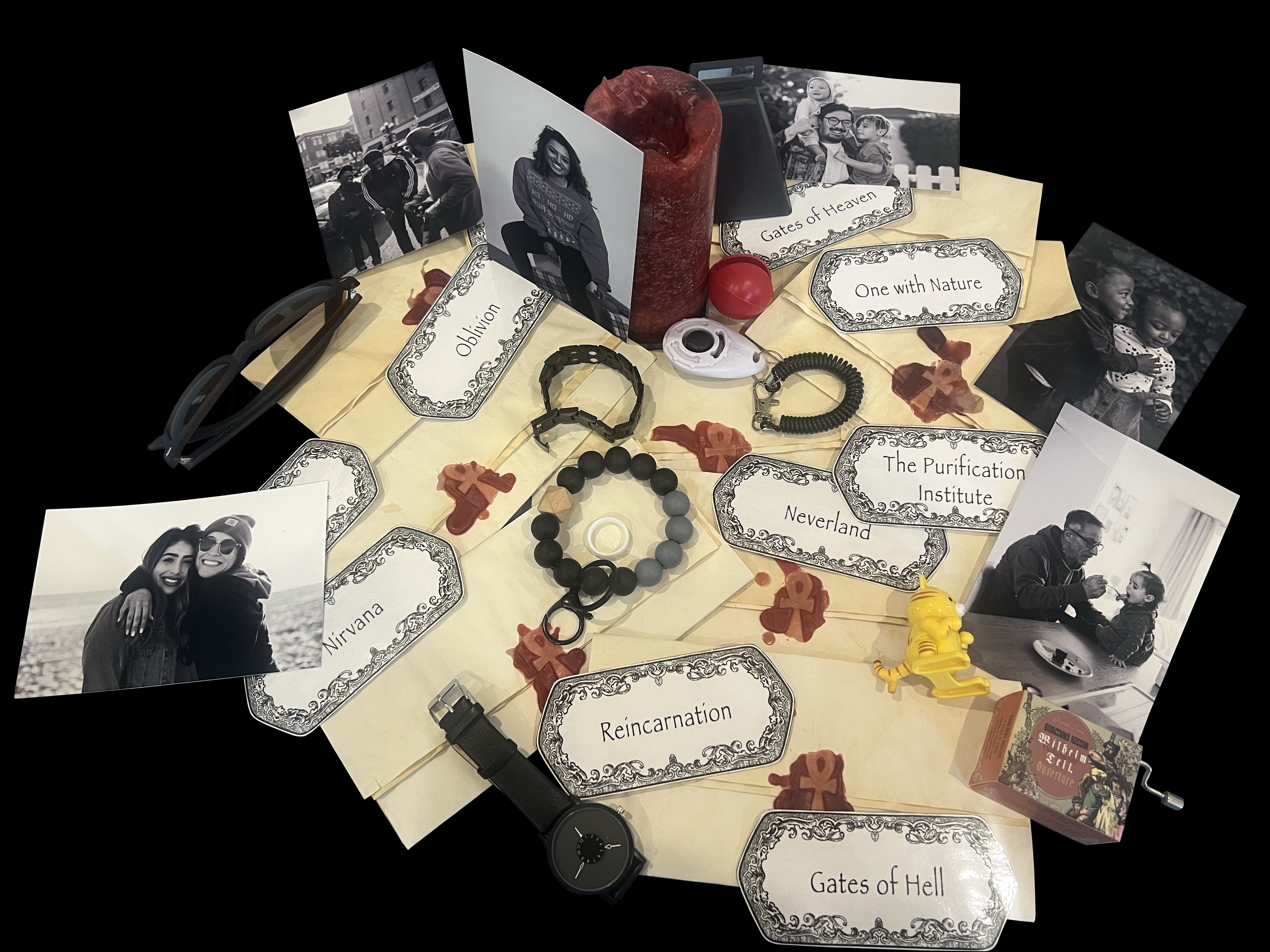
The Memory Lane workshop simulated a situation in which players were asked about something they hadn’t thought about before and had to improvise. I provided a box filled with random objects and several pictures of strangers. Three players chose an object each, while the other three chose a picture each.
First, they had to come up with a meaningful story about their chosen item or picture. Who did it belong to? Who were they? Why were they important to you? Then, they shared their story with another player. Finally, everyone presented their narrative to the group, followed by questions and discussion. Although the original game doesn’t include these two workshops, I believe they contributed significantly—especially since none of the participants had prior larp experience.
After the workshops, we took a short break for phones and the bathroom, then moved on to character creation. Each player received a letter tinted with coffee and sealed with wax stamped with the Ankh symbol. They also received two envelopes: one containing two possible causes of death, and the other with two character details. Those were only suggestions to help the players, and they could choose one of the options or even request to change the envelope. In the original game, these were “achievements,” but I replaced them with details that included both a statement and a question, which encouraged players to think more deeply about their characters. Here is a few samples:
- You found true love, but you also ruined someone’s life. What was their names?
- You were extremely wealthy, but lonely. What was your dearest possession?
- You were world-famous, but taken as a joke. What were you famous for?
- You saved someone’s life, but ended up in a wheelchair. Who was the person you saved?
- You had a wonderful life, but never kissed or had any intimate relationship. Who did you love but never confessed to?
Once a player completed their character, they were guided to the room where the game would take place and instructed not to interact with others until the end of a song.
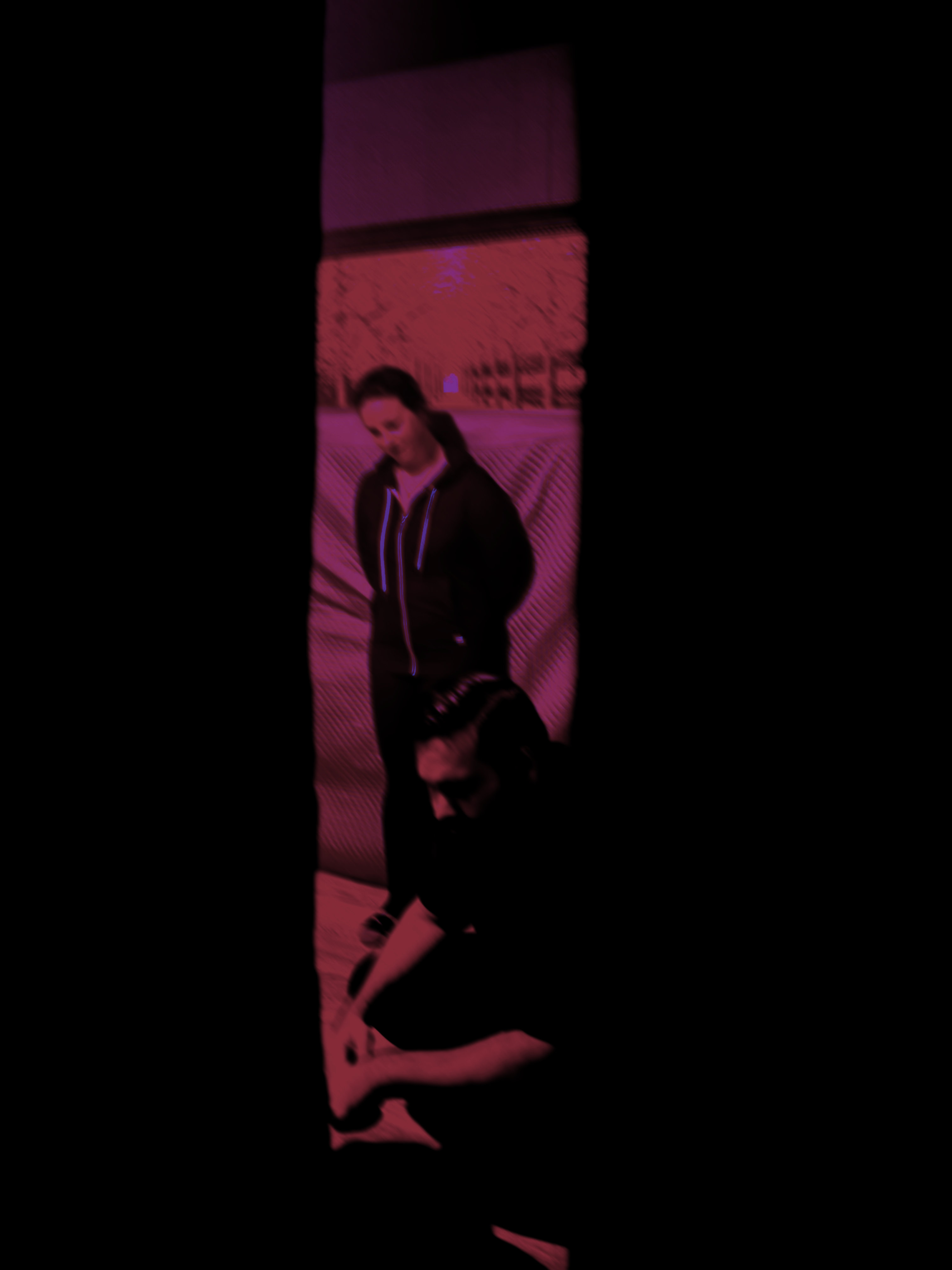
The playroom was empty, with the overhead light dimmed to 30% and changed to crimson colour. The windows were covered with black plastic bags, and fog was dispersed throughout the space. Once all players were inside, Moonlight Sonata played for approximately 45 seconds. Unlike the original game, the poem was not read.
There were only five tickets for six players, which means the last person to choose would not receive one. When the Host entered, they presented two tickets at a time, but players didn’t know what the destinations were and had to pick blindly. Players were free to exchange or give away tickets as long as it was done willingly. The tickets chosen were:
- One with Nature
- Oblivion
- Gates of Hell
- Return to Life
- Gates of Heaven
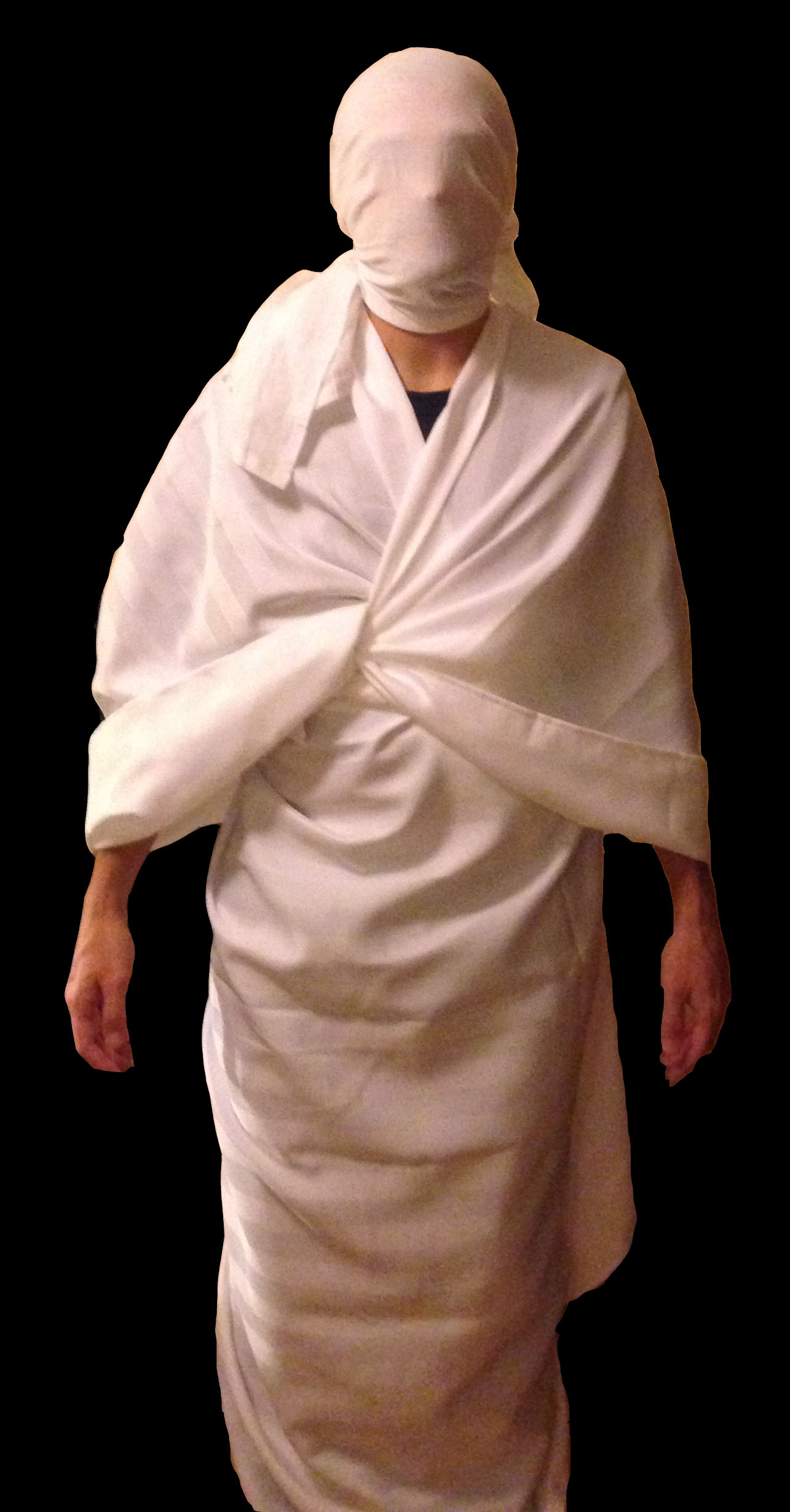
I used the same costume for the Host as in the previous run. I also introduced pictures and objects into the game. At certain moments, dressed in black, I delivered an envelope with two pictures or a single object. Thanks to The Memory Lane exercise, the players had no trouble integrating these items into the narrative.
I chose the objects and pictures based on the ongoing story. For example, when one player spoke about a wife he had cheated on, I handed him a ring. When another talked about family, I introduced a photo of two children and another of an older man with a child. As the game progressed, I gradually dimmed the light further; during the last seven minutes, the light was at 1%. Finally, I turned it off completely and turned on a faint blue light near the exit.
The game lasted about 1 hour and 45 minutes, as designed, and ended with the Host entering the room. The song Honour Hum by Hans Zimmer began to play, and the Host instructed players to walk toward the light and hand over their tickets. Before this moment, I had minimized external light, but for the final scene, I allowed daylight to fill the door symbolizing “moving into the light.” Once all players with tickets had left, the Host exited as well, and Moonlight Sonata played again. The remaining player stayed alone in the room until the song ended.
Participants enjoyed the experience and mentioned that the prompts (pictures and objects) helped maintain the flow of the game. No negative feedback was received.
Characters:
- A scientist working to prolong life who was shot.
- A professional runner who ended their own life.
- A professor who died in a fire.
- A psychologist who drove too fast on purpose.
- A writer who was struck by lightning.
- An unemployed graduate who drank bad hooch.