Artist Mentality
Every established social dance has its own identity, typically tied to a specific music genre and the aesthetic of how bodies move. If you’re familiar enough with a particular dance style, you might even be able to recognize it just by watching a video without sound.
If we look at the roots of all dances, they began with people simply moving to the most popular music in their area. At that time, there was no name for it—people just gathered to dance, responding naturally to the rhythm. But when enough people found those movements exciting and began dancing in a similar way, a recognizable dance style emerged. Before it had a name, it was just one person expressing themselves through movement to a song. The way people moved was shaped by their environment such as cultural background, ancestry, musical taste, social circles, and more. As these styles grew in popularity, more people wanted to learn them, leading to the creation of dance classes, schools, and studios. However, these classes often focus on the technical aspects—how to execute the steps—rather than the cultural roots that shaped the dance in the first place.
The dance steps we often associate with a specific style are, more often than we realize, variations of steps from other dances adapted adapted to different kinds of music. The technical execution of the steps tends to survive, but the original cultural and historical context is often lost over time. Of course, there are always those who are deeply dedicated to the dance and take the time to research and uncover its roots, preserving its origins and meaning.
Certain dances, like West Coast Swing, are danced to a wide variety of music genres, while others are more strictly tied to a specific genre, like Bachata. Some people believe it’s disrespectful to refer to Sensual Bachata simply as “Bachata", since it differs significantly from the original style that emerged in the Dominican Republic. While Sensual Bachata evolved from traditional Bachata, it has changed drastically incorporating elements from other dance styles, such as Brazilian Zouk, and accompanying music that also differs from the original bachata music.
These changes began because someone dared to move differently, stepping outside the established aesthetic of the dance. As more people embraced this new way of moving, a distinct style was born. Many of those new Sensual Bachata dancers may not have been familiar with the original form of Bachata and viewed the dance through a limited lens, while others were simply drawn to the new style—whether because of the music, the movements, or something else entirely.
What I find truly amazing is that this transformation happened through creativity. A group of people experimented, explored, and let their curiosity lead the way. As an artist, I deeply relate to that. For me, being an artist is about exploring possibilities, staying curious about what might happen, and focusing on the process more than the final product. That spirit of experimentation is where innovation, and new dance styles, are born.
From a cultural point of view, many people feel disrespected by this kind of transformation and might even see it as an abomination. Just the other day, I saw a video where someone referred to Sensual Bachata as “Snake Dance.” Perhaps if the word “Bachata” weren’t included in the name, fewer people would take offense. On the other hand, using the word “Bachata” in the name also acknowledges its roots. Depending on your perspective, it can be seen either as a form of disrespect or as an honorific nod to where the style originated.
A similar situation occurred with Kizomba and what is now known as Urban Kiz. Before the name Urban Kiz was officially adopted, it went by several names: French-style Kizomba, Kizomba 2.0, and others. These naming choices reflect a tension between honouring tradition and embracing innovation, and they continue to spark debates within dance communities around the world.
People were creative and gave birth to a new dance style that is now known worldwide. I think that’s beautiful and, in my view, it doesn’t disrespect the original dance, Kizomba. The real issue arises when you search for “Kizomba” on Google and the majority of the results show Urban Kiz. For those who aren’t familiar with the difference, it’s easy to assume that Urban Kiz and Kizomba are the same. This can be harmful to the visibility and preservation of Kizomba, as its unique cultural roots risk being overshadowed or misunderstood.
The other day, someone asked me if they could dance Kizomba to a Reggaeton song. Their reason was simple: they love the music and understand the lyrics, which helps them connect emotionally; something that doesn’t usually happen when listening to Kizomba music, which is often sung in Portuguese.
Generally speaking, dance is about connecting to the music. This person appreciated the technical aspects of Kizomba but couldn’t fully connect to its music, so they were searching for a middle ground. A teacher told them that, personally, they wouldn’t dance Kizomba or Urban Kiz to a Reggaeton song. I don’t know the reasoning behind that opinion, and of course, everyone is entitled to their own view.
However, when I think about the history of dance, it makes complete sense to try. That’s essentially how Urban Kiz was born: people wanted to dance to a different kind of music but still enjoyed the movement of Kizomba. So they began adapting Kizomba steps to fit new genres and eventually incorporated movements from other dance styles, creating something entirely new.
Of course, dancing Kizomba to Reggaeton would require some adjustments. The energy, rhythm, and feeling of Reggaeton are very different from Kizomba, so the dance would naturally evolve to match the music. It might not look exactly like Kizomba or Urban Kiz, but that’s the nature of creative exploration.
Back in the 1980s, a record called Plena was released in Angola. It featured a mix of what we now refer to as Latin music, genres like Salsa, Merengue, and others. At the time, the internet didn’t exist, and people in Angola didn’t know how to dance to those styles in the way they were originally intended. So, they used what they had, Semba and Kizomba. and danced to the Latin rhythms with their own movement vocabulary.
I love that story, because to me, that’s exactly what an artist does: they explore possibilities using the tools they have. They don’t wait for permission or perfect conditions; they create from what’s available.
There’s a quote from John Lennon that I came across in the book Show Your Work by Austin Kleon.
“I’m an artist, man,” said John Lennon. “Give me a tuba, and I’ll get you something out of it.”
Show Your Work! (p. 16). Austin Kleon.
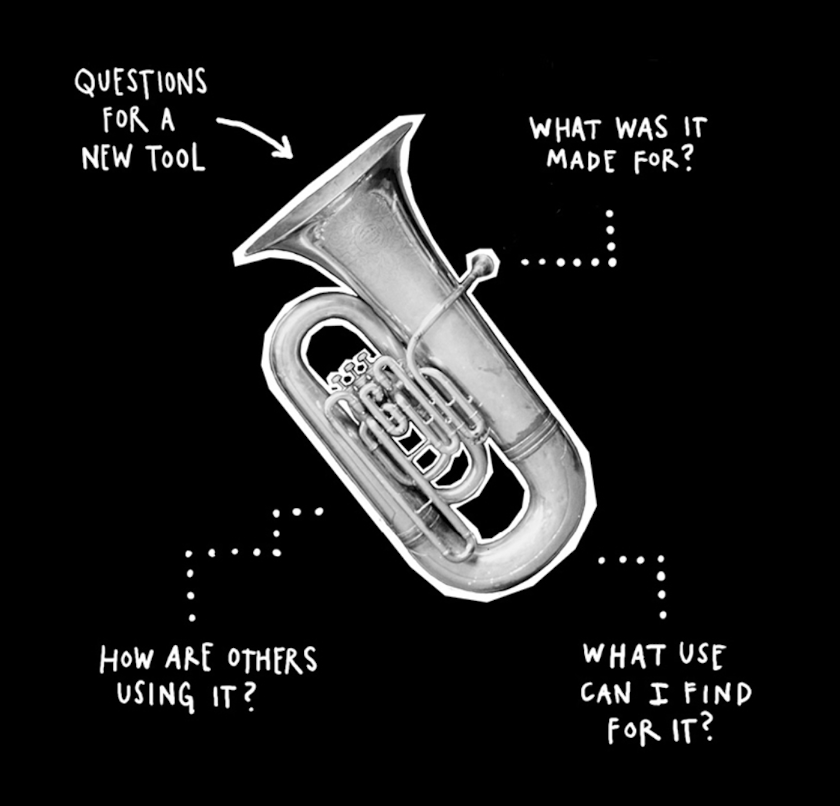
Show Your Work! (p. 18). Austin Kleon.
As an artist, for me, dance is about exploration and understanding how the body works; how I can translate music into movement. When I experiment with different styles, I do so with zero intention of disrespecting the culture where the dance originated. I explore because I genuinely enjoy different kinds of music, different types of movement, and because I come from a diverse background in dance. My approach is rooted in curiosity, creativity, and a deep respect for the art form.
During my Kizomba Teacher Training Program, our instructor shared insights about what Kizomba means to different people. One American dancer spoke about how Kizomba helped him become more comfortable with physical touch and close connection. For an Angolan dancer, it was about the joy it brought; the chance to momentarily forget life’s hardships.
For those outside of Angola, Kizomba is often presented as a product, something anyone can learn, buy, and enjoy. The same goes for Latin dances like Salsa and Bachata. But most people who didn’t live in Angola during the 1980s and ’90s may never fully understand the emotional and cultural weight Kizomba carries.
That said, art impacts people differently. Our experiences, backgrounds, and personal histories shape how we connect with it. Just because someone relates to Kizomba in a different way doesn’t mean they’re being disrespectful. They’re simply experiencing the dance through their own lens, and that, too, has value.
After many years have passed since the birth of a specific dance, often the only thing that truly lasts are the technical aspects, the steps, the movements. The original music and culture may or may not remain vibrant, and most people might not fully understand the cultural context behind the dance. This process happens in many areas of life, not just dance. As a dancer, you can choose to honor the original style as closely as possible, or you can embrace creativity and exploration, pushing boundaries and discovering new possibilities.
Walter Benjamin argued that an artistic manifestation is deeply rooted in its history and culture, and this connection cannot be fully replicated because history and culture evolve over time. When art is mass reproduced, it becomes divorced from its original cultural and historical context. While mass dissemination plays an important role in spreading cultural ideas, it often diminishes the unique artistic value and aura of the original work.
Nowadays, many dance styles have moved far from their original contexts and migrated to other countries. They carry their culture with them, through the music, the language, and the way bodies move. This cultural exchange is beautiful and important, fostering acceptance, tolerance, and understanding. However, this process often becomes more about reproduction and cultural propagation than artistic innovation. For most people, this is more than enough, and they find joy in it. But a small minority with an artistic mindset will bend the rules and challenge stereotypes to create something new, and that is both beautiful and necessary.
Here is an example of using dance steps with a completely different type of music.